Call For Papers
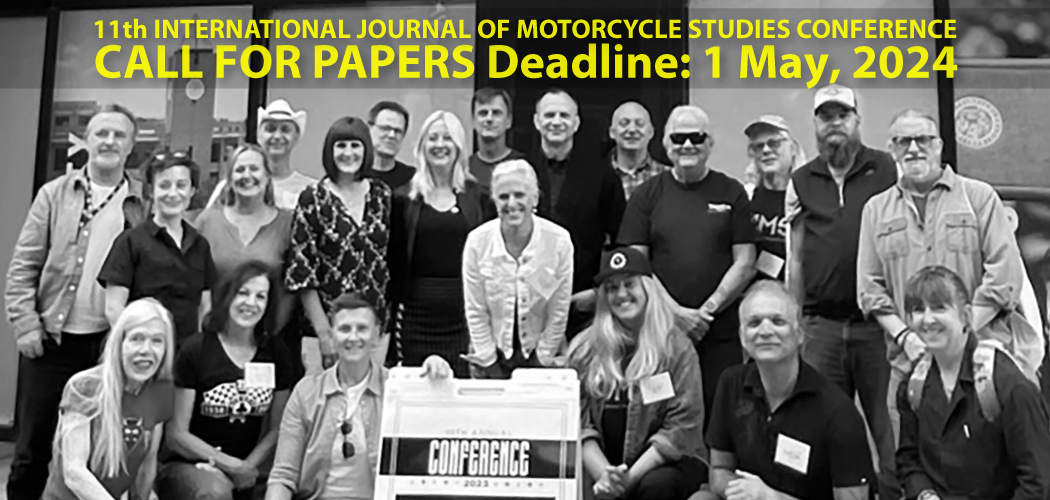
11th INTERNATIONAL JOURNAL OF MOTORCYCLE STUDIES CONFERENCE
Deadline Extended: 1 May, 2024
Authenticity Roundtable – Authenticity Through Solo Motorcycle TravelJason Wragg
Building upon the other two papers, this autoethnographic narrative delves into the lived experiences of embarking on solo adventure travel by motorcycle. Departing from conventional academic discourse, this narrative offers a personal and evocative exploration of the captivating world of solo adventure motorcycle travel. The purpose of this autoethnographic narrative is not to present a definitive thesis or unwavering conclusion ...
Authenticity Roundtable – Two-wheeled Authenticity, or: Existentialism on a Motorcycle?Mathew Humphrey
In 2018, cultural historian Maiken Umbach and I published a book on ‘authenticity’ as an ideological concept. We explored the ideological appropriation of the idea of authenticity across discourse about the natural world, about industrial society, in leadership, and in the field of consumption. We had a few pages in there on authenticity and motorcycle subculture, and that potential connection between motorcycling and authenticity ...
Authenticity Roundtable – Authenticity in MotorcyclingSteven E. Alford
Significantly, motorized transport is often an element in an owner’s identity formation, from Ford Mustangs to Teslas, from Vespas to Harleys. What one drives or rides reflects the owner’s character, suggesting that there’s no small identity anxiety involved in the purchase and use of a motorized vehicle. Groups form around them, and then further distinctions are made among owners. In the world of motorcycling, distinctions are often made ...
Iron Horse Cowgirls: Louise Scherbyn and the Women Motorcyclists of the 1930s and 1940s Book Review By Sheila Malone
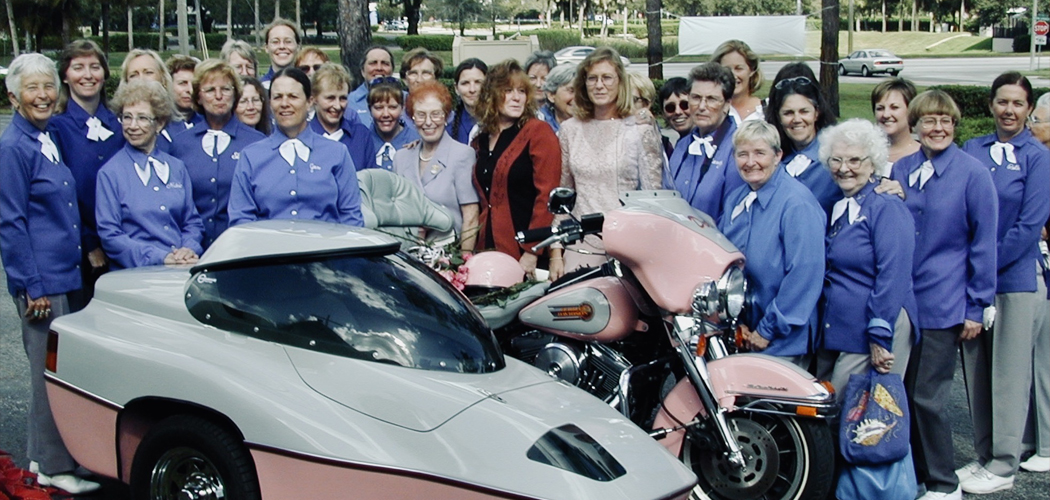
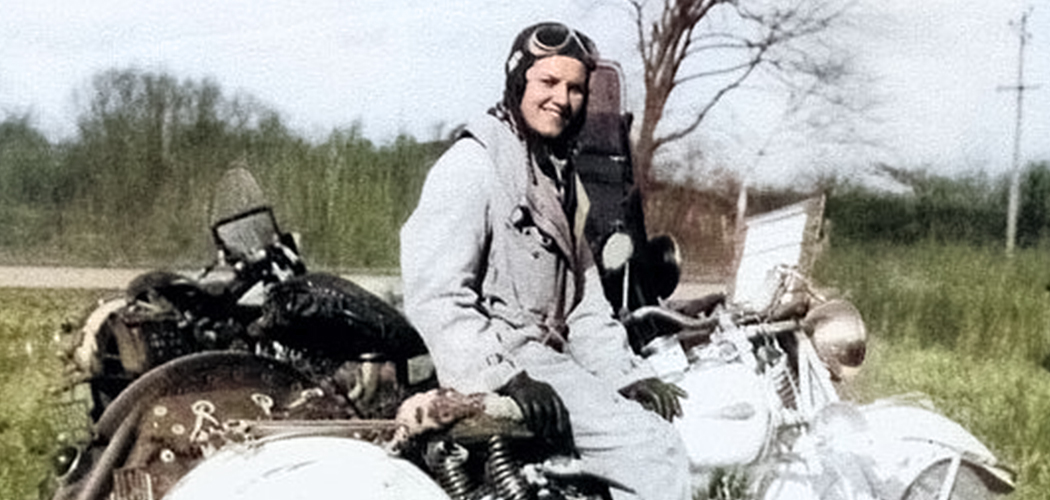
The story of Louise Scherbyn, the founder of the Women’s International Motorcycle Association (WIMA) is strikingly rendered in the forthcoming book Iron Horse Cowgirls: Louise Scherbyn and the Women Motorcyclists of the 1930s and 1940s by Linda Back McKay and Kate St. Vincent Vogl, McFarland Publishers (Fall 2023). The authors overlay the acts of writing with riding (driving) motorcycles ...
Identifying the barriers to a wider uptake of motorcycles as a primary mode of transport for commuting in the UKAlex Parsons-Hulse
A growing body of research indicates numerus benefits could be achieved from a modal shift in personalised transport from cars to motorcycles, or other forms of powered two-wheelers (PTWs). Benefits include a potential 40% reduction in congestion for all road users coupled with a 6% reduction in the emission cost of pollutants (Yperman, 2011). In most vehicle “use case scenarios” a reduction in lifecycle greenhouse gas emissions ...
10th IJMS Conference: Details, Program and Schedule
Remembering Geoff CrowtherSteven Alford, Suzanne Ferriss, Christian Pierce & IJMS Friends
It is with great sadness that we note the passing of Geoff Crowther, one of the founding board members of The International Journal of Motorcycle Studies and the driving force behind our first international conference, held on the Isle of Man in 2007 to celebrate the centenary anniversary of the TT races ...
“The Constant is that Governments Regard Motorcyclists as a Problem”: Riders’ Rights Activists in the United Kingdom on Threats, Political Mobilization, and FreedomMathew Humphrey & Jessica Andersson-Hudson
In terms of transport choice, it is quite exceptional to be a motorcyclist. Around 0.8% of United Kingdom (UK) road journeys in 2019 were by powered-two-wheeler (PTW) (UK Department of Transport, n.d.). The 3.0 billion vehicle miles (bvm) covered by motorcycles in that year in the UK is less than the total mileage of pedal cycles at 3.5bvm. Like pedal cyclists, motorcyclists are classed as “vulnerable” road users ...
Chrome and Black and Dusty: Robert Pirsig’s Motorcycle HeritagePaul F. Johnston
Many people know Robert Maynard Pirsig (1928-2017) as author of the iconic 1974 volume Zen and the Art of Motorcycle Maintenance: An Inquiry into Values (William Morrow, NY). Dedicated reader-riders may even remember that he rode a motorcycle across the Midwest to California and back with his son back in the 1960s. But virtually no one outside of his immediate family members know ...
The Unbearable Lightness of Crashing to make international debut in ItalyJames J. Butler & Charles Austin Muir
James J. Butler and Charles Austin Muir grew up watching stuntman Evel Knievel. Years passed, and they forgot what it was like to follow Knievel's death-defying motorcycle jumps on television. Then James dusted off his 1990s replica of the 1973 Evel Knievel toy stunt cycle and had Charles capture one of the toy jumps on video. Watching the initial footage, they found something so joyous and ridiculously suspenseful ...
The Second Life of the Big British Twin? Some Conflicting Signals from the Current Market James J. Ward
It has been a half century since the death of the large-displacement British parallel twin was proclaimed by a not entirely sympathetic motorcycling press, as one venerable factory after another closed its gates and the industry ceded the future to the seemingly all-conquering multiples coming from the East. Like many obituaries, this one was somewhat inaccurate and somewhat premature ...